
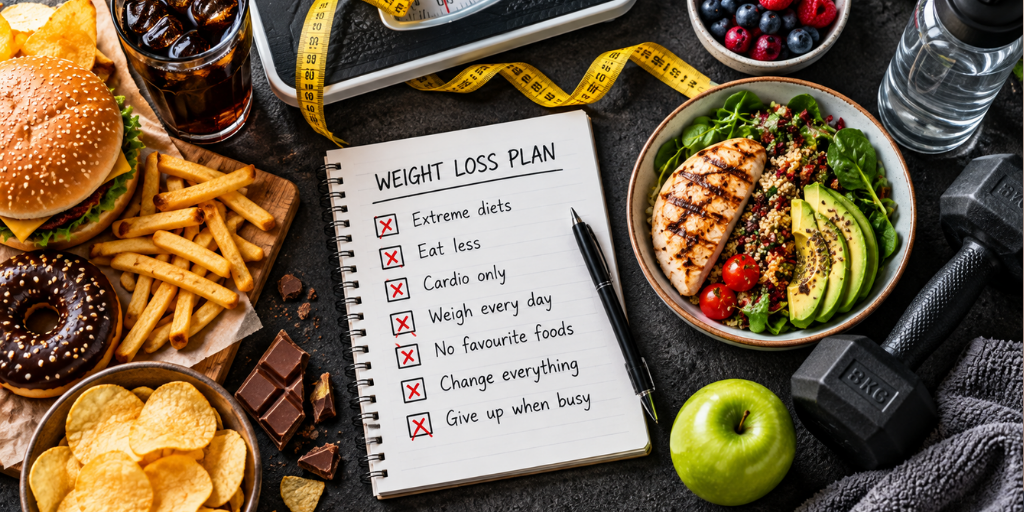
Struggling to lose weight despite trying your hardest? These common mistakes could be holding you back, and here’s how to fix them.
Losing weight can feel frustrating when you’re putting in plenty of effort but not seeing the results you expected.
Perhaps you’ve started going to the gym, changed your eating habits, or followed several different diet plans. You might even have experienced some initial success, only to find that your progress slows down or the weight gradually returns.
If this sounds familiar, it’s important to understand that the solution isn’t necessarily to work harder or eat less. Sometimes, the problem is the approach itself.
At Absolute Body Solutions, we believe successful weight loss starts with understanding your individual needs and building a realistic plan around your lifestyle. Here are six common mistakes to avoid when working towards your goals.
1. Trying to Change Everything at Once
One of the most common mistakes is making too many changes too quickly.
You decide to train five times a week, eliminate your favourite foods, prepare every meal in advance and completely overhaul your daily routine. Initially, this enthusiasm can feel motivating.
However, maintaining so many new habits simultaneously can quickly become overwhelming.
When life becomes busy, your carefully planned routine can become difficult to manage. Once you miss a few workouts or eat something outside your plan, you might feel that you’ve failed.
How to fix it: Start with manageable changes and build from there.
Focus on establishing a consistent training routine, improving your everyday food choices and finding opportunities to move more. As these behaviours become part of your lifestyle, you can gradually introduce additional changes.
Sustainable progress is built over time, not through trying to become a completely different person overnight.
2. Following a Diet You Can’t Maintain
There is no shortage of diets promising fast weight loss. Some involve cutting carbohydrates, others restrict food choices, and many encourage dramatic changes to your calorie intake.
While different dietary approaches can work for different people, the most important question is whether the approach is realistic for you.
If your diet leaves you constantly hungry, excludes foods you enjoy or makes eating out unnecessarily difficult, you may struggle to follow it for more than a few weeks.
This is a key principle discussed by ABS founder Connor O’Brien in the company’s guidance on choosing a diet: sustainability and food preferences should be central to your plan.
How to fix it: Build your nutrition plan around foods you enjoy and can access easily.
Include a variety of nutritious foods, make sure your meals are satisfying, and allow room for social occasions. You don’t need to eat the same meals every day or eliminate every food you enjoy to make progress.
The right plan should support your goals while still allowing you to live your life.
3. Eating Too Little in the Hope of Getting Faster Results
It can be tempting to assume that eating as little as possible will lead to the fastest results.
However, an overly restrictive approach can leave you feeling tired, hungry and less able to maintain your training routine. It can also make it harder to meet your nutritional needs.
Weight loss generally requires a sustained calorie deficit, meaning you consume less energy than your body uses. But that doesn’t mean you should automatically choose the lowest possible calorie intake.
A more measured approach gives you room to adjust your nutrition as your needs and progress change.
How to fix it: Focus on an appropriate, sustainable calorie deficit rather than extreme restriction.
Prioritise balanced meals, adequate protein and a variety of nutrient-rich foods. If you’re unsure how much you should be eating, a qualified nutrition professional or registered dietitian can help you determine an appropriate approach for your circumstances.
The goal is to make progress while supporting your health, energy levels and ability to stay consistent.
4. Relying Entirely on Exercise
Exercise is an important part of a healthy lifestyle. Strength training can help improve strength and preserve muscle during weight loss, while cardiovascular activity supports fitness and overall health.
However, some people assume that simply exercising more will automatically lead to weight loss, regardless of their eating habits.
It’s possible to work hard in the gym while consuming enough additional calories to offset the energy used during exercise. Equally, some people become less active throughout the rest of the day because they’re tired after their workouts.
This doesn’t mean exercise isn’t working. It means weight management involves more than your scheduled training sessions.
How to fix it: Combine structured exercise with supportive everyday habits.
– Follow a training programme suited to your goals and fitness level.
– Include strength training appropriate to your ability.
– Build more movement into your daily routine, such as walking.
– Pay attention to nutrition, portion sizes and food choices.
– Allow adequate time for recovery.
At ABS, training and nutrition are considered together, helping clients develop a more complete approach to their goals.
5. Expecting the Scales to Drop Every Week
Weight loss rarely follows a perfectly straight line.
Your weight can fluctuate because of changes in fluid balance, digestion, carbohydrate intake, hormonal changes and other normal factors. A temporary increase doesn’t necessarily mean you’ve gained body fat, just as a sudden drop doesn’t always represent fat loss.
The problem arises when people interpret every fluctuation as evidence that their plan is succeeding or failing.
How to fix it: Look at trends rather than isolated measurements.
If weighing yourself is appropriate for you, consider tracking consistent measurements over time instead of reacting to a single reading. You can also monitor changes in strength, fitness, measurements, clothing fit and how you feel day to day.
ABS incorporates body composition measurements into its programmes, allowing trainers to review progress and adapt a client’s approach when needed.
Remember that progress can take several forms, and the scales are only one source of information.
6. Giving Up When Life Gets in the Way
Even the best plan will occasionally be disrupted.
You might have a demanding week at work, go on holiday, become unwell or have family commitments that make your normal routine difficult to follow.
The mistake isn’t experiencing a setback. It’s believing that one setback means you might as well abandon your goals altogether.
How to fix it: Develop a plan for imperfect weeks.
If you can’t complete your usual workout, try a shorter session or a walk if appropriate. If meal preparation becomes difficult, keep a few convenient, balanced options available. When your schedule returns to normal, resume your usual routine without feeling the need to compensate for what you’ve missed.
Consistency doesn’t mean never experiencing disruption. It means learning how to return to your habits when circumstances change.
Why Personalised Coaching Can Help
Every individual has different challenges when trying to lose weight. Some struggle with nutrition, others lack confidence in the gym, and many find it difficult to balance fitness with work and family life.
A personalised programme can help identify the obstacles that matter most to you.
At Absolute Body Solutions, personal training programmes are designed around individual goals, fitness levels and lifestyles. Clients receive tailored training and nutrition guidance, alongside ongoing communication and support.
Final Thoughts
If you’ve struggled with weight loss in the past, you don’t necessarily need another extreme diet or a more punishing workout routine.
You may need a more realistic plan, better support and a clearer understanding of the habits that will help you make progress.
Focus on consistency, build a nutrition plan you can maintain, exercise in a way that suits your ability and give yourself time to develop healthier routines.
Ready to take a more structured approach to weight loss? Book a free consultation with Absolute Body Solutions to discuss your goals and find out how personalised coaching could help.


